Op-eds, articles, and short commentary.
The AI failure tax — why pay-per-token pricing rewards vendors for their own unreliability, why enterprises are escaping to open-weight Chinese models, and why outcome-based contracts matter more than export controls.
The age of perpetual breach — why machine-scale vulnerability discovery has outrun remediation, why patching clocks measure the one variable an adversary has already outrun, and why information is the true centre of gravity.
The window before impact — why warning time has not vanished but moved into the gap between compromise and exploitation, and why advantage belongs to whoever sees the stolen assets first.
Maritime coercion targets the price of risk rather than the ship — why an unconfirmed report of IRGC plans against Asian shipping still matters, and why economic deterrence by denial should replace escalating punishment.
The behavioural export — how distillation moves frontier AI capability through authorised use rather than as cargo, and why trusted access to cognition is becoming an alliance privilege.
The alliance reserve — why Australia’s greatest AUKUS vulnerability is a public consensus thinning faster than anything happening in Washington, and why a treaty is the receipt rather than the relationship.
The megawatt wall — why the binding constraint in the AI race has migrated below chips, below generation and below politics into heavy electrical engineering, and why the queue is now the hierarchy.
The illusion of cover — why documented compliance is not protection against undocumented threats, and why institutional credibility is migrating from what organisations can attest to what they can endure.
The invisible balance sheet — why the accounts can price a breach to the dollar but cannot record the confidence it destroys, and why trust has become strategic infrastructure.
Error debt — why reliability has not scaled with capability, how hostile services turn ordinary machine error into an attack surface, and why epistemic sovereignty is becoming the ultimate source of power.
The atomic perimeter — why machine-speed intrusion and post-quantum cryptography are moving protection from the network to the individual datum, and why control of trust is becoming the currency of information-age power.
Compute clearing — how remote access to advanced processors defeats an export control regime built for physical borders, and why the states that write the rules of compute will govern the next international order.
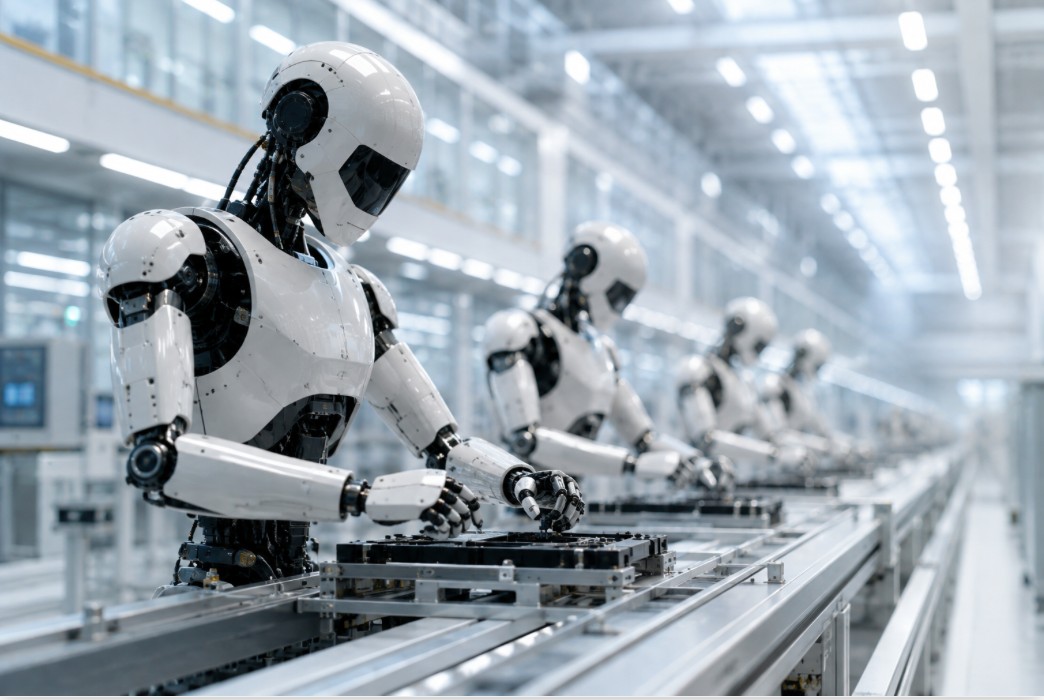
Manufactured demography — how Beijing is converting labour supply from an organic variable into an industrial output, and why the state that standardises machine labour first will dictate the rules of twenty-first-century production.
America is trying to win the AI race by withholding technology. China intends to win it by giving technology away — and the giveaway is working. Why democracies need an Abundance Doctrine before Beijing owns the world’s AI stack.
The civic veto — how household electricity politics is becoming the binding constraint on machine intelligence, and why democracies must treat social licence as strategic infrastructure.
Why compute — not algorithms — will decide the AI century, and how the location of hyperscale data centres, semiconductor supply chains, and sovereign cloud are already shaping the balance of power in the 2030s.
Why democracies risk pricing themselves out of the AI century — the Democracy Premium, cognitive dumping, and why affordability of trusted AI is now a national security issue.
Semiconductors and compute dominate the strategic debate. But the decisive contest will be over who can make autonomous systems accountable — and the window to act is closing.
How artificial intelligence is turning democratic openness into authoritarian advantage — and why mastery, not retreat, is the answer.
Why understanding AI may matter more than owning it — the next phase of strategic competition will be decided by evaluation, not ownership.
AUKUS is a wager worth making, with eyes open. Why three capitals signed, and what the official case glosses over.
Orbital data centres, the 1967 Outer Space Treaty, and the looming auction of jurisdiction for frontier compute.
When intelligence itself begins to compete with humans for the role of inventor, sovereignty becomes a question about who controls the engines of intelligence.
An AI-driven cyber arms race that compresses the discovery-to-exploitation window to seconds — and forces a hard look at whether human institutions can keep up.
Frontier AI is becoming strategic infrastructure. The builders are warning; governance has not yet answered.